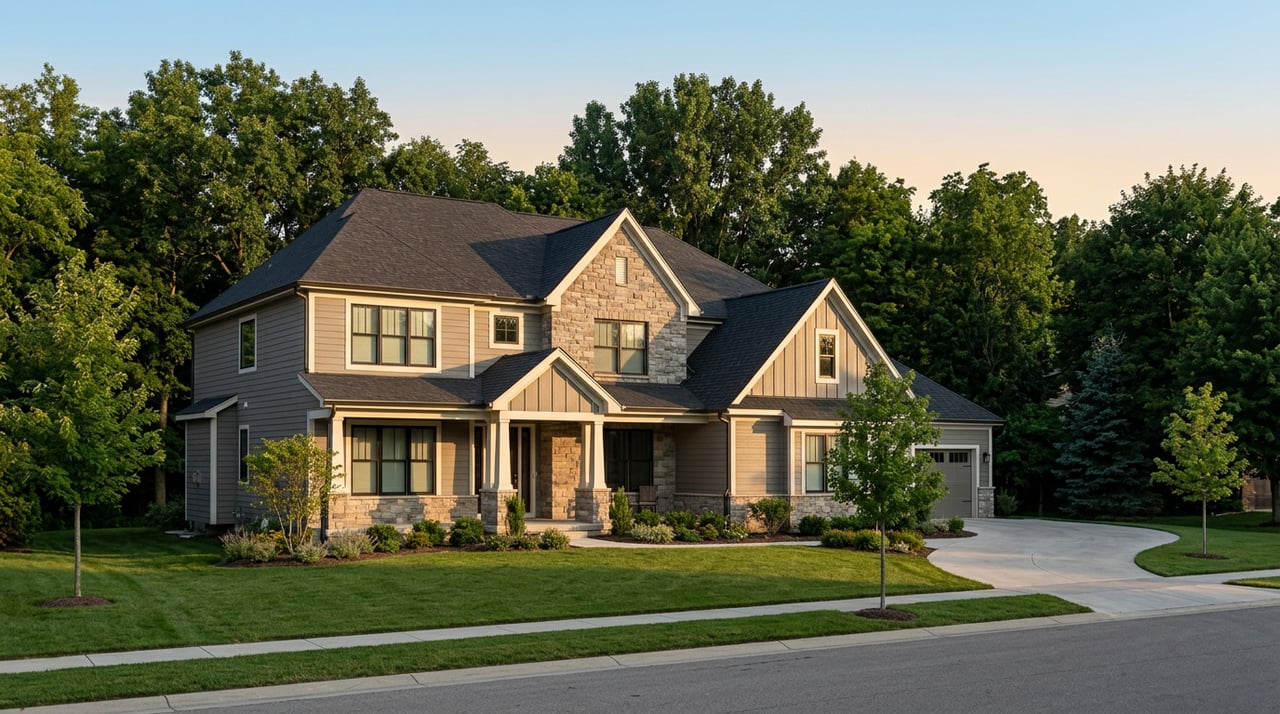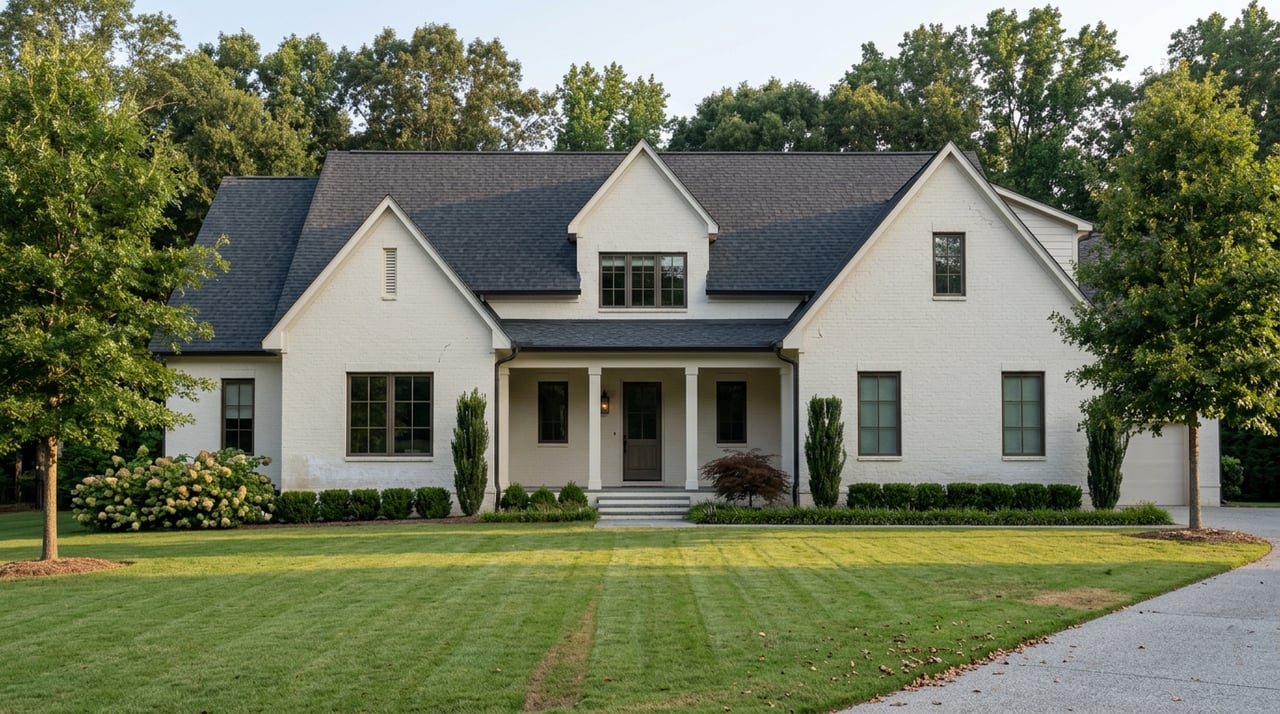
Pull up Flowery Branch on Zillow, Redfin, Orchard, and Fundry in the same browser session and you will see four different cities. One is down 2.8% year over year. One is down 17.7%. One is up 5.9%. One shows a third of listings taking a price cut while another shows a third selling above list. Every number is real. None of them describes the house you are actually thinking about buying or selling.
The Flowery Branch median is not measuring a housing market. It is measuring a builder incentive schedule, and once you separate the two, the picture stops contradicting itself.
That is the thesis of this post. If you are comparing north Atlanta suburbs on price, the citywide median for 30542 is the least useful number in the conversation, because a large share of what is trading is new construction with rate buydowns, closing-cost credits, and quiet base-price reductions layered on top. The resale market that most homeowners actually live in behaves differently.
Four sources, four Flowery Branches
Here is the same city, same summer, four ways.
| Source | Reported figure | As of | YoY direction |
|---|---|---|---|
| Zillow ZHVI | $427,568 typical value | April 30, 2026 | Down 2.8% |
| Redfin | $375,000 median sale price, 83 days on market | January 2026 | Down 17.7% |
| Orchard | $480,000 median sale price, 28 days on market, 31.25% sold above list, 37.5% took a price cut | Last 30 days as of report | Up 5.9% |
| Fundry | $428,205 typical value, ~35 days to contract, 30.2% price-cut share | June 2026 | Down 2.4% |
Two of those sources put the median in the $427K to $480K band. One reports a $375K January print. The gap is not a measurement error. It is the difference between what Flowery Branch inventory looks like in a slow winter month heavy on builder discounting versus a spring and early summer with better resale mix. When the same ZIP can move $100,000 in reported median in a single quarter, the median is telling you about listing composition, not about home values.
The builder pipeline is doing the arithmetic
Flowery Branch is one of the most active new-construction ZIPs in the northern I-985 corridor. A partial roster of what is actively selling in 30542 as of summer 2026:
- Taylor Morrison Falls Creek, 3935 Alderstone Drive, base pricing from the $410s, with recently reduced quick move-in homes on Alderstone Drive ranging roughly $493,840 to $589,690.
- Taylor Morrison entry inventory in the ZIP starting from $299,900, flagged "Hot Deal" and "Recently reduced."
- Ashton Woods from $343,990, with three-bedroom, two-bath plans between 1,842 and 1,855 square feet.
- Pulte Homes from $410,990, and a second Pulte community from $457,615.
- Century Communities from $329,900 on one plan set and $474,615 on another.
- David Weekley Homes from $421,400 across two communities.
- McKinley Homes Mulberry Summit, townhomes from 1,685 to 1,975 square feet with community pool and nature paths, incentive package advertised through May 30, 2026 including standard refrigerator, washer, and dryer, plus a "no payments for the first 3 months" option through the preferred lender.
- Enclave at Park Haven, a new 92-unit townhome community near historic downtown with a price-reduction window that expired April 15, 2026.
Every one of these communities can move base pricing without moving list price, because the value transfer to the buyer flows through rate buydowns and closing credits rather than a public price cut. A $12,000 lender credit does not show up in the median. A $299,900 base does. That is how a city with strong resale demand and 28-day contract times on Orchard's most recent report can simultaneously show a Zillow index down 2.8% year over year. Fundry's finding that roughly 30.2% of listings take a price cut is a partial tell. Most of that share is builder inventory sitting past its release date, not owner-occupants capitulating.
For a buyer, the practical consequence is that the "average Flowery Branch home" no longer exists as a shopping category. You are either buying into an active builder pipeline where the negotiation is about incentive stacking and finish level, or you are buying resale near Lake Lanier, along Phil Niekro Boulevard, or inside walking distance of Main Street, where inventory is thinner and the pricing conversation looks nothing like a builder spec sheet.
Meanwhile, the city is rationing supply
The other half of the story is that Flowery Branch itself is tightening what gets built. Two 2026 council actions matter here.
On March 19, 2026, the City Council approved a predevelopment agreement with Alpharetta-based Penn Hodge Properties for the next phase of Old Town Redevelopment. The plan calls for a two-story parking deck with more than 200 public spaces accessed from Church Street, 270 additional gated residential spaces accessed from Mitchell Street, a 3,000-square-foot restaurant at Church and Pine, and a rebuilt breezeway connecting Main Street to the new development. A public town hall on the design followed on May 4 at the Train Depot at Railroad Avenue and Main Street. This is the phase after the city hall, police headquarters, farmers market pavilion, and amphitheater already built in earlier rounds. It concentrates future downtown density into a single controlled project rather than dispersing it into subdivisions.
On April 2, 2026, the same council voted 3-2 to deny Highpoint Development's rezoning and variance requests for a 75-lot single-family subdivision on Hog Mountain Road, on land at 4651 and 4665 Hog Mountain Road that has now been through three separate development proposals in about a year. The council did approve annexation of the parcels from Hall County on a 4-1 first reading, but the density the developer wanted, which included reducing the minimum lot size from 6,700 to 5,500 square feet, did not clear. Council member Chris Mundy told AccessWDUN after the vote that he was "not sure honestly how we're going to be able to proceed."
Layer on the new "net density" definition tracked by planning observers, which reduces buildable area by 50% for wetlands and stream buffers, and the pattern is clear. The city is willing to concentrate downtown-adjacent housing under controlled design standards. It is significantly less willing to grant density variances on the edges. That combination puts a soft ceiling on future large-tract subdivision approvals while directing higher-value residential into a walkable downtown footprint. For a buyer weighing new construction versus resale near Old Town, that policy direction is the single most important piece of information not showing up in any median chart.
What to actually look at before you write an offer
If you are shopping Flowery Branch in the second half of 2026, the citywide median deserves about 30 seconds of your attention. The following filters deserve the rest of it.
- Split new construction from resale in your comps. A builder incentive is not a comp for the resale home two streets over. Ask for the sale-to-list ratio on resale-only closings in the specific subdivision or ZIP quadrant you are considering.
- Read the price-cut share as a builder signal, not a market signal. When roughly 30% of listings show a price cut and Orchard's last-30-days data shows 31.25% closing above list, both are true at the same time. The cut share is skewed toward standing builder inventory. The above-list share is skewed toward well-prepared resale.
- Downtown-walkable is now its own submarket. Penn Hodge's Old Town project, combined with the existing Main Street retail and residential build-out, is creating a small pocket where walkability is priced into resale in a way it is not elsewhere in 30542. That pocket does not track the citywide index.
- On the sell side, price to the resale comp, not the builder base. A seller who prices against a $329,900 builder base pricing signal will leave equity on the table. A seller who prices against comparable resale on a similar lot, with disclosure-quality photography and a strategic launch window, is generally seeing sale-to-list ratios well above what the citywide "down 2.8%" narrative implies.
- Ask which side of I-985 you are on. The east side around Stonebridge Village and the Thurmon Tanner Parkway commercial corridor behaves differently from the west side approaching Lake Lanier. One median cannot cover both.
FAQ
Are Flowery Branch home prices actually falling in 2026? The typical resale home in an established Flowery Branch subdivision is not tracking the same curve as the citywide index. The index is being weighted by heavy new-construction volume with active incentive programs. In the last reported 30 days, Orchard measured a median sale price of $480,000, up 5.9% year over year, with a 97.71% sale-to-list ratio. That is a different market than the January 2026 Redfin print of $375,000.
Is now a good time to build or buy new construction here? Incentive levels are unusually generous on standing inventory, particularly at Taylor Morrison Falls Creek on Alderstone Drive and at Mulberry Summit. The trade-off is that competing resale inventory is thinner, and the city's April 2 Hog Mountain vote suggests future large-lot subdivision approvals will be harder to come by, which supports long-term values in the existing inventory.
What should a downtown-adjacent seller know? The Penn Hodge Old Town project, approved for predevelopment on March 19, 2026, and detailed at the May 4 Train Depot town hall, is a value-shaping event for anything inside walking distance of Main Street. Buyers who understand what is coming at Church and Pine will pay for proximity. Buyers who do not, will not. A listing narrative that names the project by name and cites the specific approval date does more work than another generic "close to downtown" bullet.
If you are trying to figure out which Flowery Branch price actually applies to your home, or the home you want to make an offer on, that is a conversation worth having with someone who reads the council minutes and the builder incentive sheets in the same week. Jamie Mock works Flowery Branch and the surrounding Hall and Gwinnett corridor with a marketing-led approach designed for exactly this kind of split market. Request your free home valuation to see where your property lands against real resale comps, not a citywide average that is measuring something else.